
The Archon Council decided to put a change up for vote. You can vote on the following change:
The Archon Council decided to put changes up for vote. You can vote on the following changes:
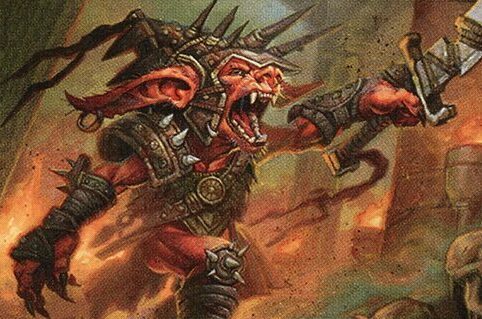
Ban Rograkh, Son of Rohgahh as a Partner in Archon
Ban The Fantasticar as a Commander in Archon
Voting closes: 15-07-2026, 12:00 CEST
You can head over to our discord to cast your vote!
Here are the reasoning for the proposed change:
Ban Rograkh, Son of Rohgahh as a Partner in Archon
After considering the available options, we believe that banning Rograkh as a partner is the most appropriate way to address the current power level of Storm while preserving the archetype itself. The core issue is not Storm as an archetype, but the unique role Rograkh plays within it. Rograkh fundamentally bypasses one of Magic’s intended resource constraints. He is always available from the command zone, costs no mana, and immediately enables a large number of cards that were designed around requiring a creature to already be on the battlefield. Cards such as Culling the Weak, Diabolical Intent, Skullclamp, and many others become significantly stronger simply because Rograkh exists. At the same time, he provides free Storm count, expands a deck’s color identity at virtually no opportunity cost, and enables commander-dependent effects without requiring any mana investment. These advantages are unique and consistently reward strategies that seek to exploit them.
Storm is currently the strategy that makes the most effective use of these advantages, but we do not believe Storm itself is the underlying problem. Rather, Rograkh is the engine that allows the deck to operate at its current level of speed and consistency. He reduces the number of resources required to assemble winning lines and removes meaningful deckbuilding and gameplay costs that were intentionally built into many of the cards the deck relies on. Recent developments, such as the adoption of the Drake package, reinforce this conclusion. These cards have introduced additional lines of play that require fewer resources, present new angles of attack, and improve the deck’s resilience against common forms of interaction. Rograkh once again amplifies these strategies by providing a free Storm count in every game. This illustrates that the underlying issue is not any individual payoff card, but Rograkh’s ability to maximize every efficient Storm engine that becomes available. We carefully considered alternative bans. Removing cards such as Tendrils of Agony or Yawgmoth’s Will would undoubtedly weaken the deck, but these approaches primarily address individual payoffs rather than the engine that enables them. Storm has already demonstrated an ability to adapt by adopting new win conditions and alternative lines of play. We therefore believe that banning individual payoff cards would either fail to sufficiently reduce the deck’s overall power level or unnecessarily eliminate a long-standing archetype from the format. By contrast, banning Rograkh weakens the strategy without removing it entirely. Storm remains a viable archetype, but it must once again commit meaningful resources to effects that are currently enabled for free. This should make the deck slower, less consistent, and more interactive, while still allowing room for future innovation through different commanders and partner combinations.
We recognize that this decision carries collateral damage for other Rograkh partner decks. We do not dismiss this concern. However, we believe these decks generally rely on Rograkh less fundamentally and, in many cases, can adopt alternative red partners without losing their overall identity. More importantly, we do not believe a card should be evaluated solely by its fairest applications. Rograkh’s defining characteristic is that he consistently removes costs that other decks are expected to pay, and it is this quality that repeatedly enables unhealthy gameplay patterns across multiple strategies. For these reasons, we believe banning Rograkh as a partner is the most balanced solution. It addresses the source of the current Storm deck’s consistency and speed, preserves the archetype itself, and reduces the likelihood that future printings will continue to push Rograkh-based strategies beyond an acceptable power level.
Ban The Fantasticar as a Commander in Archon
After reviewing both tournament results and extensive testing, we believe that The Fantasticar warrants an emergency ban. The speed of the deck alone would already make it a serious contender. However, speed is not what makes the deck unhealthy. It is the combination of speed, consistency, resilience, and the type of interaction it demands that pushes it beyond what we believe Archon can reasonably support. The deck is capable of presenting game-ending pressure as early as turn two while remaining surprisingly resilient to disruption. Although interaction exists, conventional answers are often insufficient. Unlike other fast strategies, answering a single permanent rarely solves the problem. The deck can frequently rebuild, recast The Fantasticar multiple times, and eventually overwhelm the opponent once their interaction is exhausted. Equally concerning is the nature of the interaction the deck requires. Point removal, which forms a large portion of the interaction played throughout the format, is often ineffective. Instead, players are incentivized to adopt narrow artifact-specific hate cards that would otherwise not be considered in a healthy, sideboardless singleton format. When decks begin including cards primarily because they must respect a single strategy rather than because those cards have broad utility across the format, it is a strong indication that the metagame has become distorted. We have also considered whether the format should simply adapt over time. Normally, this is our preferred approach. However, in this case, we are not convinced that natural adaptation would lead to a healthier metagame. The required adjustments are substantial and often come at the expense of improving other matchups. In a format without sideboards, asking players to dedicate valuable deck slots to highly specific answers carries a significant opportunity cost.
Comparisons have been made to other explosive commanders such as Dargo or Hogaak. While these strategies are undeniably powerful, they are fundamentally different in how they apply pressure and how they can be answered. The Fantasticar regularly produces sixteen hasty power spread across multiple bodies, making traditional removal significantly less effective than against a single large threat. This creates gameplay where many of the interaction patterns that normally define Archon simply cease to matter. Perhaps most importantly, we do not believe The Fantasticar adds meaningful diversity or healthy gameplay to the format. Instead, it compresses games into repetitive play patterns where opponents are forced to either present very specific interaction immediately or fall hopelessly behind. The deck’s combination of explosive starts, resilience, and ability to recover after disruption leaves too little room for interactive gameplay. Emergency bans should be used sparingly and only when a card clearly demonstrates that it has an immediate and unhealthy impact on the format. Based on the available tournament results, extensive testing, and the experiences shared by a wide range of competitive players, we believe this threshold has been met. For these reasons, we support an emergency ban of The Fantasticar.